The Complete Ring Guide 2026

The Forever
Guide.

You have decided on forever. Now comes the ring. This guide is built for couples who want to walk into a jeweler knowing exactly what they want, why they want it, and what it should cost.

Ready to begin?
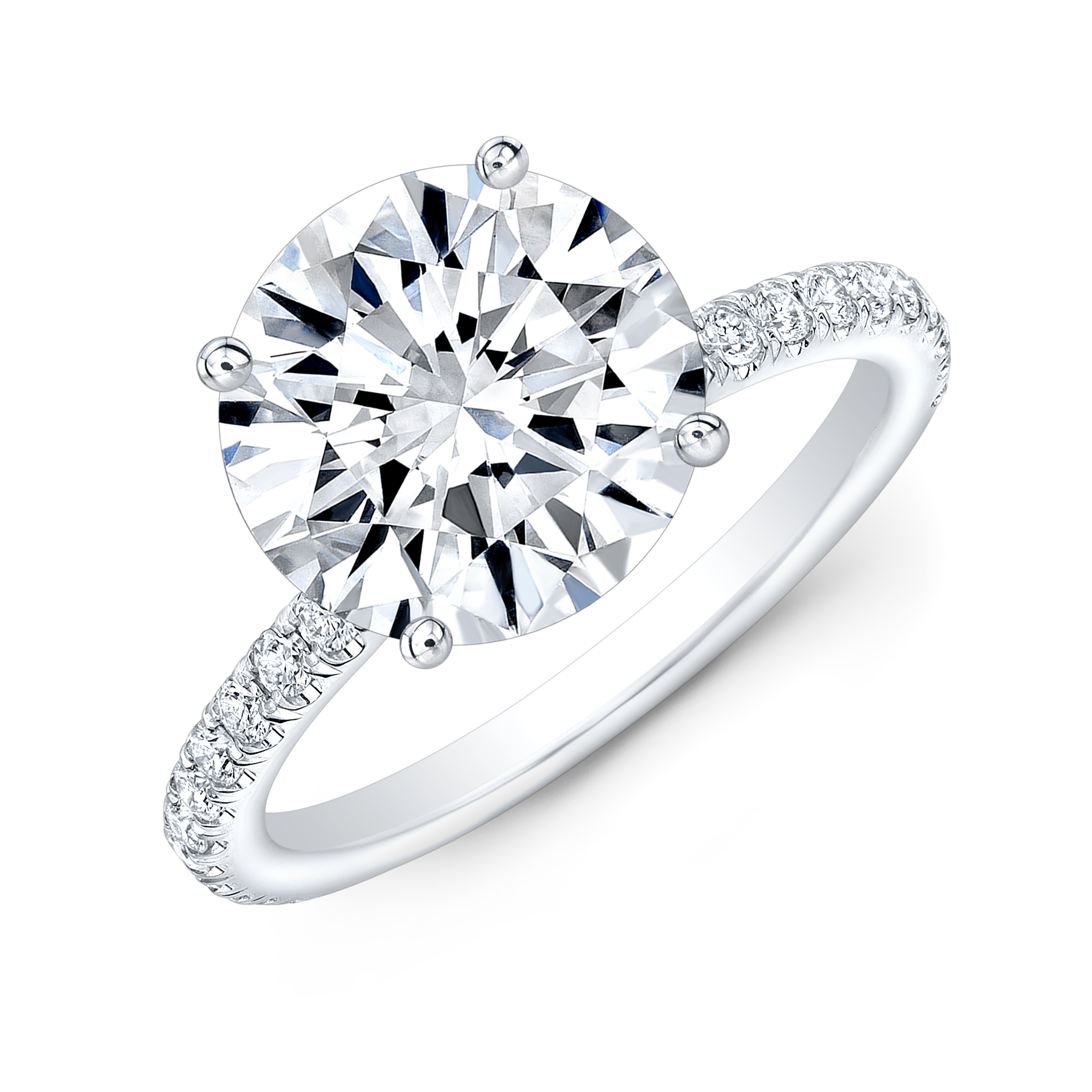
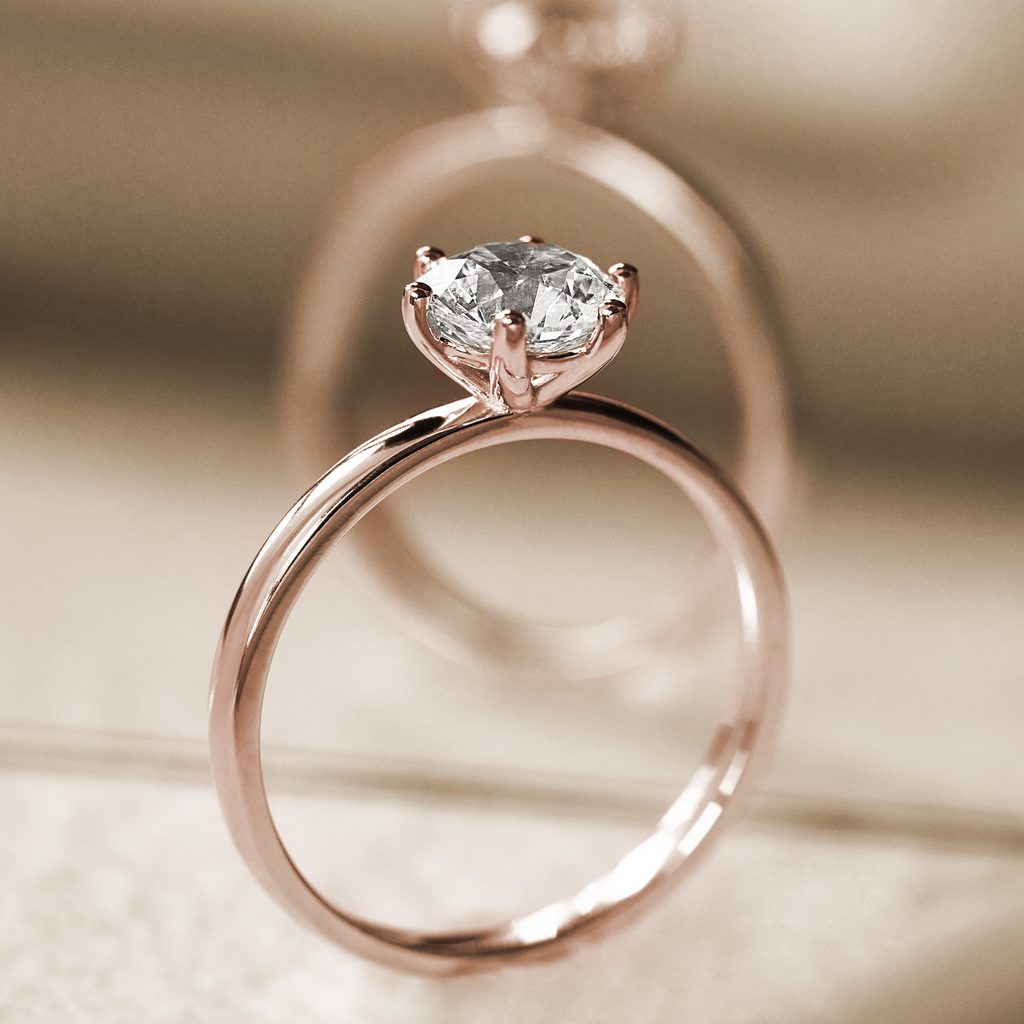
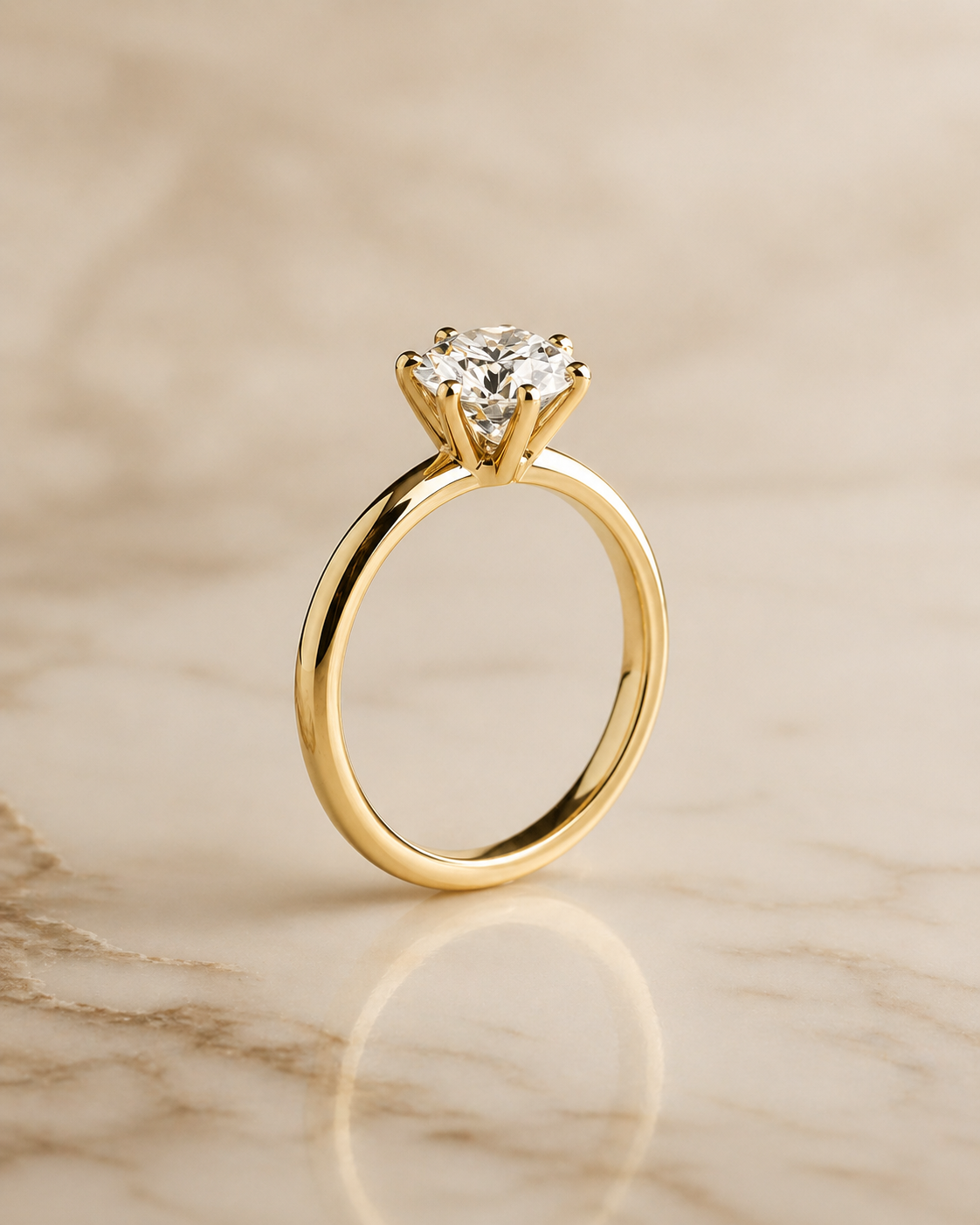
Diamond engagement ring
The round brilliant solitaire
For the couple beginning their forever

The person is chosen.
The ring deserves the same certainty.

You are about to make one of the most meaningful purchases of your lives together. Most couples do it knowing almost nothing: they walk in nervous, nod along to whatever the jeweler says, and leave second-guessing every decision. That ends here. This guide walks you through everything, from the history of the diamond to the difference between a lab and mined stone, to which shape flatters which hand. By the time you finish, you will have a personalized ring specification and the kind of quiet confidence that comes from actually knowing what you are talking about.

Your journey

Eight chapters. Total confidence. One ring.

Two phases. First you learn. Then you choose. At the end, a ring specification that is entirely yours.

Part 1  ·  Learn
01
History
From ancient Rome to De Beers to the lab diamond era.
02
The 4Cs
Cut, Color, Clarity, Carat. How every diamond is graded.
03
Lab vs mined
The real price gap and how to decide for yourself.
04
Beyond diamonds
Sapphires, moissanite, rubies. What lasts and what does not.
Part 2  ·  Choose
05
Your stone
Lab, mined, sapphire, or moissanite?
06
Your shape
Round, oval, cushion, or emerald cut?
07
Setting and metal
Solitaire or pavé, platinum or rose gold.
08
Your ring
Your spec. Ready to take to any jeweler.

Each chapter builds on the last. Start at 01 and end with a ring that is entirely yours.

Before you begin

Three things the industry would rather you did not know

60%
Cheaper, same stone
A lab diamond is 60 to 80 percent cheaper than its mined equivalent. Identical carbon. Identical sparkle. Identical certificate. The premium you are skipping is geological scarcity, not beauty.
1947
The two-month rule
Invented in 1947 by a De Beers advertising agency. It has no basis in tradition, culture, or logic. Spend what reflects your values, not a copywriter's brief.
Cut
The only thing that matters most
A perfectly cut G color stone outsparkles a poorly cut D color stone without exception. The certificate grade is irrelevant if the facets are wrong. Cut is everything.
"Diamonds are a girl's best friend."
Marilyn Monroe

This guide is your companion to finding that best friend. The one you will wear every single day, for the rest of your life together.
The journey to forever begins here

Learn everything.
Decide confidently.
Walk in like a pro.

Thirty minutes. Eight chapters. Every answer you need. Leave with a ring specification built entirely around your preferences, your hand, and your budget. No overwhelm. No guesswork. Just the clarity that a decision this significant deserves.

Prices and market data current as of 2026

Before we begin

What should we call you?

We will use your name to personalise your ring specification at the end of the journey.

Chapter 1

A brief history of the ring

The engagement ring has roots far older than the diamond industry would have you believe. The tradition begins in ancient Rome, where a simple iron band was placed on the third finger of the left hand. Romans believed a vein ran directly from that finger to the heart: the vena amoris.

1477
The first diamond ring. Archduke Maximilian of Austria gives Mary of Burgundy a diamond ring. For the next four centuries, diamonds remain the exclusive province of royalty.
1837
Victorian era. Industrialization brings gemstones within reach of the middle class. Rings become elaborately sentimental: floral motifs, enamel, and hidden messages spelled in gemstones called acrostic rings.
1901
Edwardian period. Platinum enters jewelry. Delicate filigree and lacework settings become the signature of the era. Settings become architectural feats.
1920
Art Deco. Geometric boldness inspired by Cubism and the machine age. Rings become angular and graphic. The emerald cut finds its natural home here.
1947
A Diamond Is Forever. De Beers launches one of history's most effective ad campaigns, tying diamonds to eternal love and embedding the two-months-salary convention. Within a decade, the diamond engagement ring shifts from luxury to expectation.
2016
Lab diamonds go mainstream. Advances in CVD technology make lab-grown diamonds commercially viable at scale. Prices begin falling. The market begins to shift.
2026
The new landscape. Lab diamonds now account for over 40 percent of engagement ring sales. A 2ct lab diamond costs what a 0.75ct mined stone cost five years ago. The choice is now genuinely open.
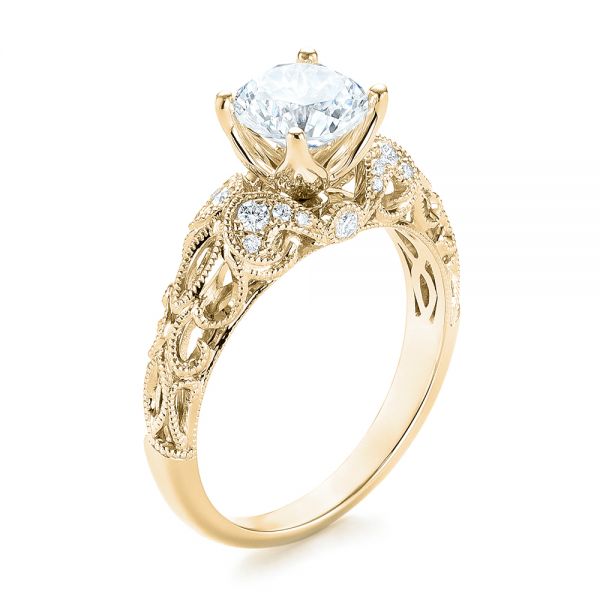
Art Deco, 1920s

Geometric platinum filigree, old European cut diamonds. Handcrafted detail that modern machines rarely replicate.

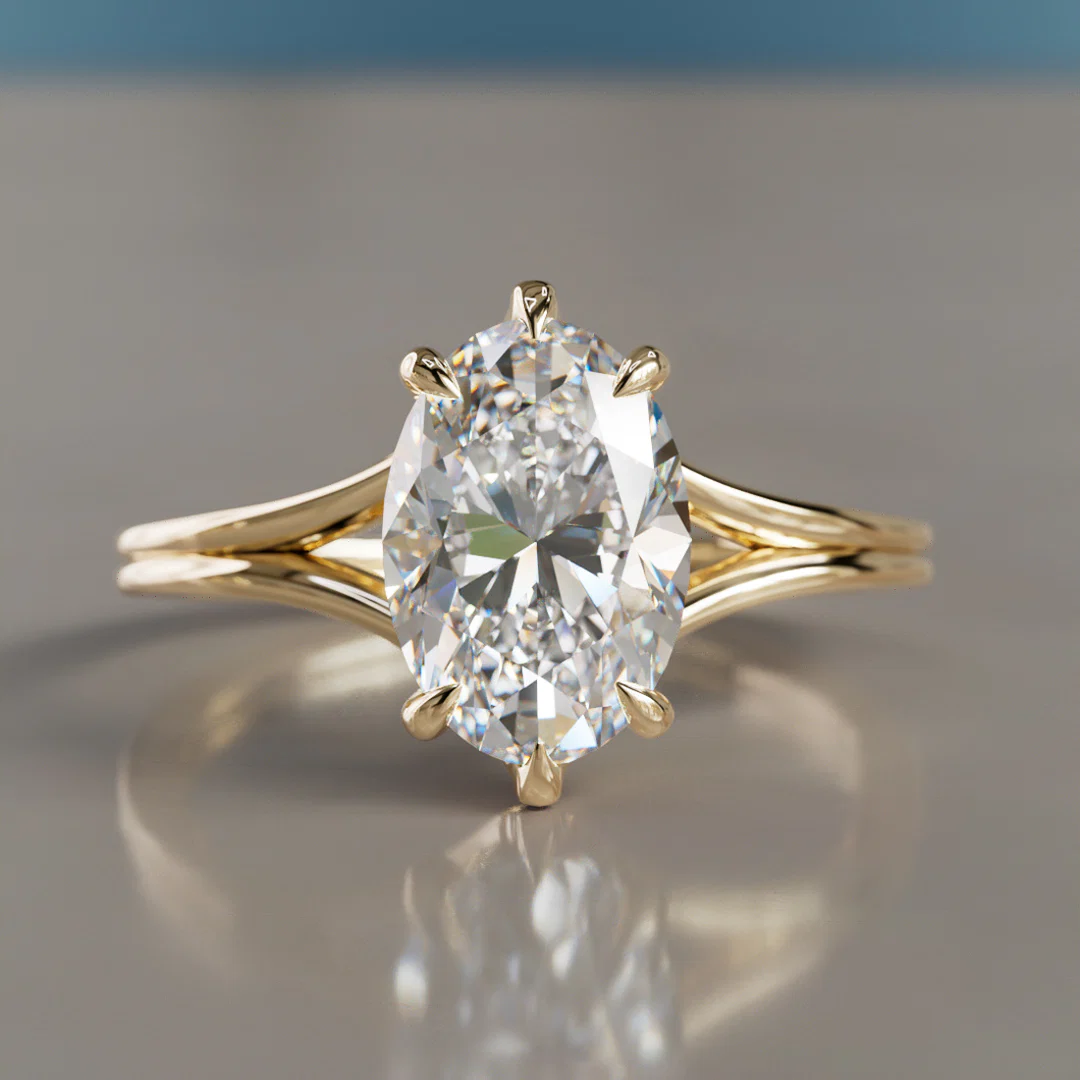
Contemporary, 2026
Modern oval engagement ring

Elongated oval, thin pavé band, clean profile. Designed to photograph beautifully and wear effortlessly every day.

"The two-months-salary rule was invented by an advertising agency in 1947. It is a marketing construct, not a tradition."
Chapter 2

The 4Cs — what every diamond is judged by

Every diamond in the world is graded against four criteria. Master these four things and you will never be confused in a jeweler again. We will walk through each one together.

2.1  ·  Most important
Cut
Sparkle. The single most important factor. Never compromise here.
2.2  ·  D to Z scale
Color
How white or warm the stone appears. G to I is the sweet spot.
2.3  ·  FL to I3 scale
Clarity
Internal flaws. VS1 or SI1 is all you need. Flawless is invisible overkill.
2.4  ·  Weight
Carat
Size by weight. Price scales exponentially. Shape can make a stone look larger.
Chapter 2.1  ·  The 4Cs

Cut — the only C that is entirely human

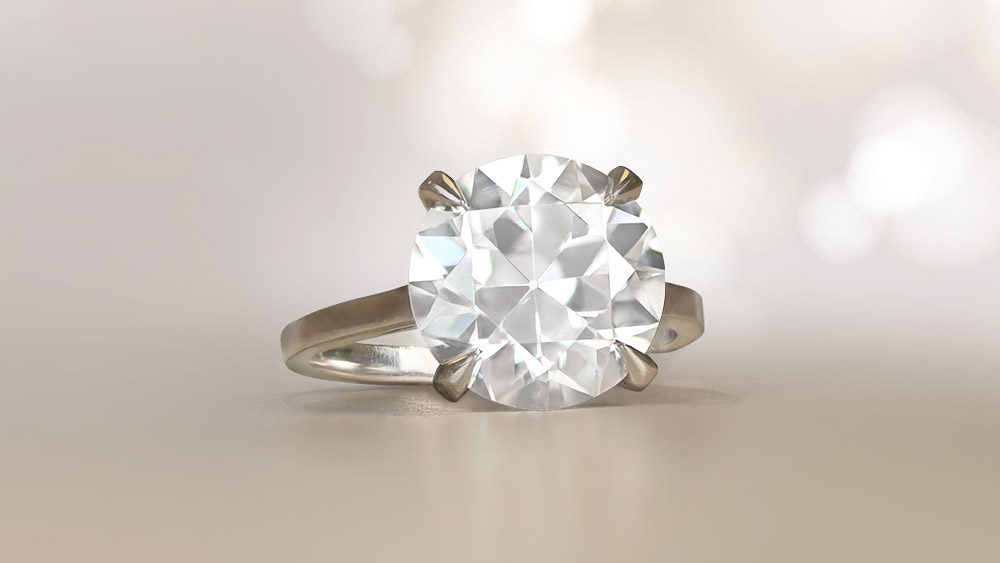
Cut does not refer to shape. It refers to the precision of the facets: their angles, proportions, symmetry, and finish. A perfectly cut diamond acts as a light engine. Light enters through the table, bounces through the pavilion facets, and fires back up through the crown in white brilliance, colored fire, and scintillating sparkle.

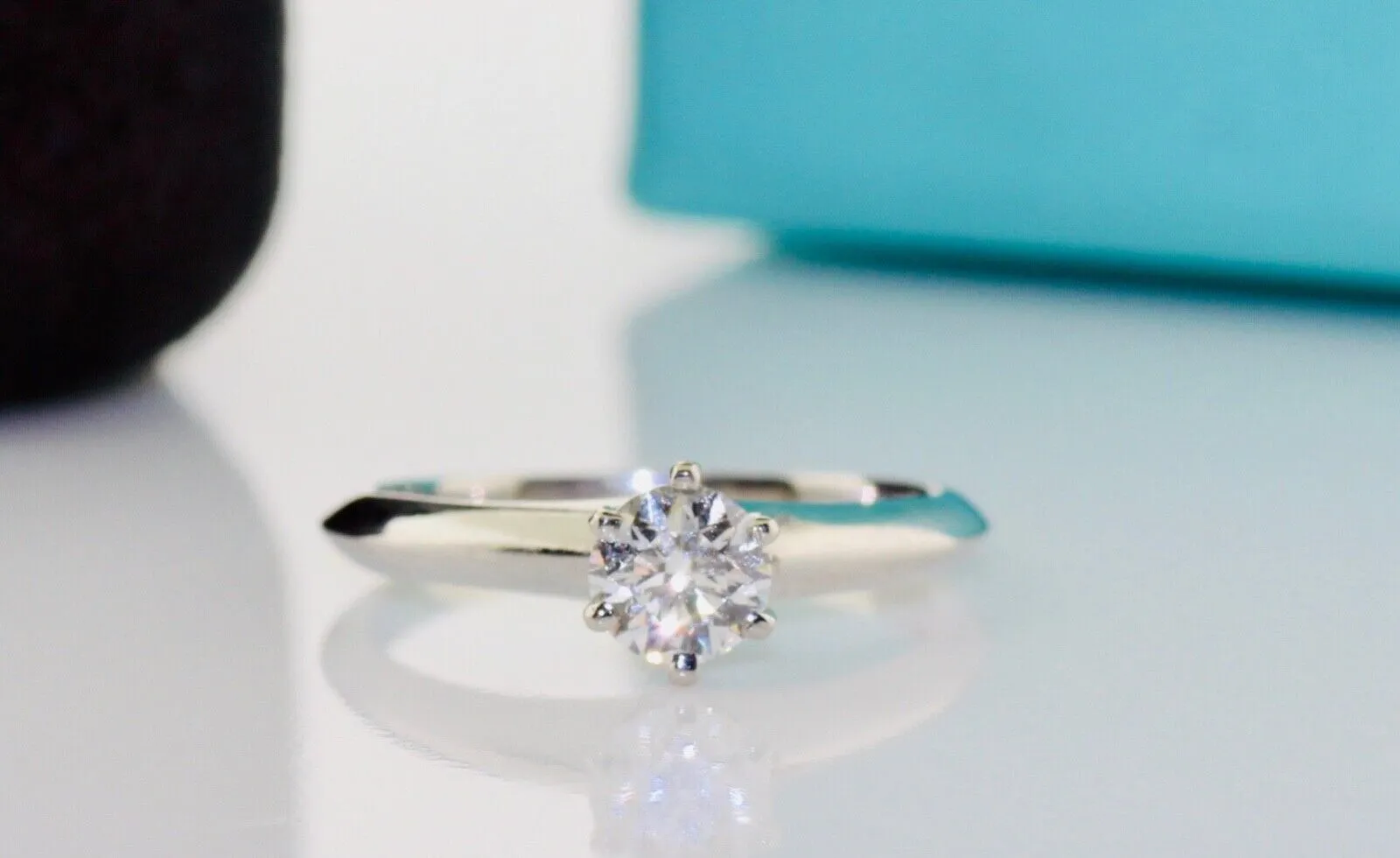
Excellent cut diamond ring showing full brilliance
An Excellent cut round brilliant in white gold — light returns through every facet
Grade↑ Best at top
Excellent ★Maximum light performance. The only grade worth buying. This is your target, non-negotiable.
Very GoodMinor trade-off in brilliance. Acceptable only if budget is extremely tight.
GoodNoticeably less sparkle. Not recommended for a center stone.
Fair / Poor  ⚠Avoid. A larger dull stone looks worse than a smaller brilliant one. Never buy this grade.
Fancy shapes (oval, cushion, pear): GIA does not issue a cut grade. Look for Excellent Polish and Symmetry, and always review light performance imagery.
A well-cut G color stone outsparkles a poorly cut D color stone every single time. Cut is the one C you cannot fix after purchase. Prioritize it above everything else.
Chapter 2.2  ·  The 4Cs

Color — white, warm, or somewhere between

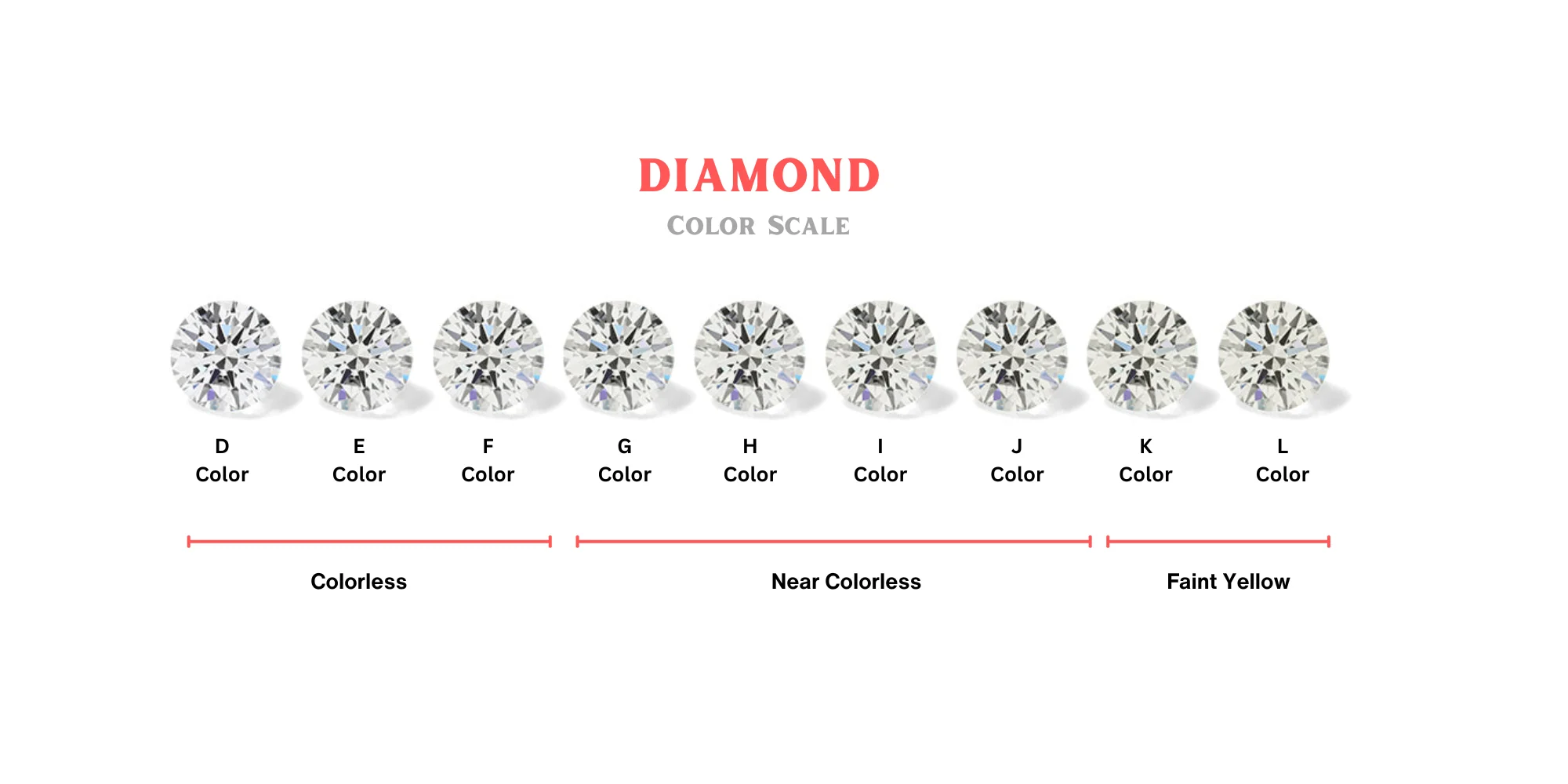
GIA grades diamond color on a scale from D (completely colorless) to Z (visible yellow tint). The scale begins at D because earlier grading systems were so inconsistently applied that GIA chose to start fresh.

Diamond ring color comparison white gold
G color diamond in platinum — visually identical to D at a fraction of the price
Color grade (D to Z)↑ Most colorless at top
D, E, F  ·  ColorlessThe rarest and priciest tier. Indistinguishable from G once set in a ring. Premium is enormous for what no eye can see.
G, H, I  ·  Near colorless  ★ Sweet spotThe practical best-value choice. G reads as perfectly white in white gold or platinum. H and I show warmth only under magnification.
J, K  ·  Faint tintJ works in yellow or rose gold. K and below will show visible warmth in most settings.
L to Z  ·  Visible yellow  ⚠Noticeably warm or yellow to the naked eye. Avoid for a white engagement ring.
Metal tip: G or H in yellow gold still reads white — the warm metal provides contrast. Platinum and white gold pair best with D to I.
Target G to I for a white metal setting. You will not see the difference from D once the ring is on the finger, but the price difference is significant.
Chapter 2.3  ·  The 4Cs

Clarity — what lives inside the stone

Clarity refers to internal characteristics called inclusions, formed during the diamond's growth over millions of years under extreme heat and pressure. Every natural diamond has them. Lab diamonds form them too, just more quickly. GIA grades clarity under 10x magnification.

Diamond ring detail macro clarity
VS1 clarity — no inclusions visible to the naked eye under any circumstances
Clarity grade (FL to I3)↑ Clearest at top
FL, IF  ·  FlawlessNo inclusions even under 10x magnification. Extraordinarily rare and priced accordingly. Overkill for daily wear — no one will see the difference.
VVS1, VVS2Extremely difficult to detect even under magnification. Eye-clean with a large margin. Unnecessary premium for most buyers.
VS1, VS2  ★ Best valueMinor inclusions visible under magnification only. Completely eye-clean to the naked eye. This is your target range — confidence and value in one.
SI1, SI2SI1 is usually eye-clean. SI2 needs case-by-case evaluation — always request HD imagery before buying. Do not accept SI2 on faith.
I1, I2, I3  ⚠ AvoidInclusions visible to the naked eye. Avoid for center stones entirely. These grades compromise the ring visually and structurally.
Eye-clean is the standard, not a number on a certificate. VS1 or VS2 gives you comfort and value. Anything above VS1 is paying for what lives exclusively under a microscope.
Chapter 2.4  ·  The 4Cs

Carat — weight, size, and perception

Carat is a unit of weight. One carat equals 0.2 grams. It is the most emotionally loaded of the 4Cs, and the one most easily managed with the right shape choice. Price scales exponentially: a 2ct stone costs far more than two 1ct stones of identical quality.

Oval diamond ring on hand showing carat size
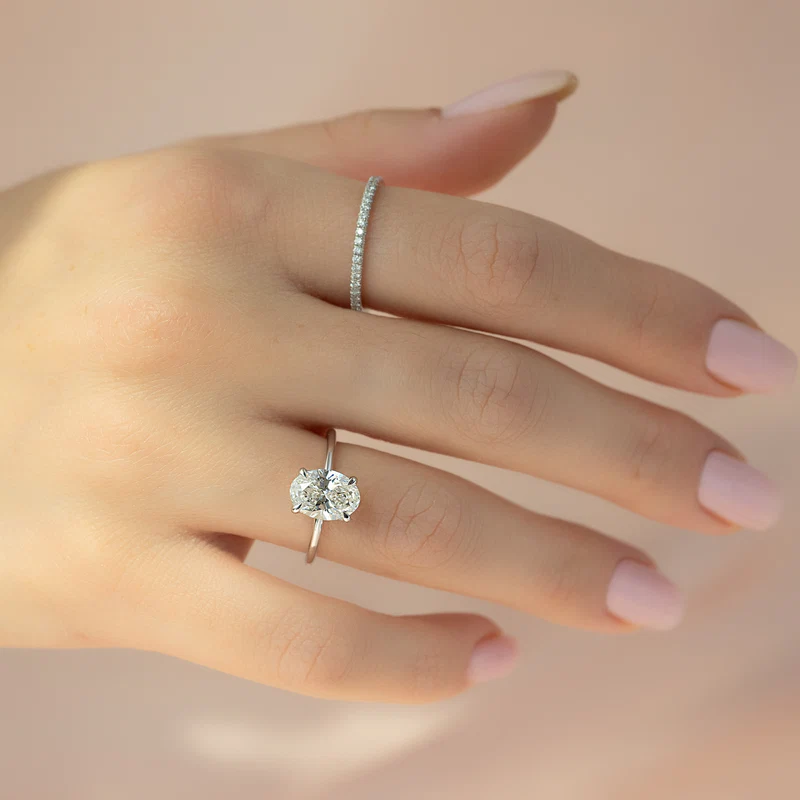
2ct oval lab diamond — faces up larger than a 2ct round due to its elongated spread
Shape changes everythingAn oval at 2ct has a greater face-up area than a round at 2ct. Marquise and pear are the most dramatic examples. Elongated shapes are the best tool for maximizing perceived size.
Lab diamonds unlock caratIn 2026, a 2ct lab diamond at G/VS1/Excellent retails for $2,000 to $4,000. The mined equivalent is $18,000 to $28,000. Lab diamonds make meaningful carat weight genuinely accessible.
The magic numbers1ct, 1.5ct, and 2ct are psychological thresholds where prices jump. Buying just below — 0.9ct, 1.4ct, 1.9ct — can save meaningfully with no visible size difference.
Petite hands read largerOn a size 5 to 6.5 hand, a 2ct oval looks proportionally dramatic. The same stone on a larger hand reads differently. Match carat to hand size as much as to budget.
Cut affects carat perception more than any other variable. A well-cut 1.5ct stone often outshines a poorly cut 2ct. Always secure cut first, then maximize carat within what remains.
Chapter 3  ·  Lab vs Mined

Lab or mined?

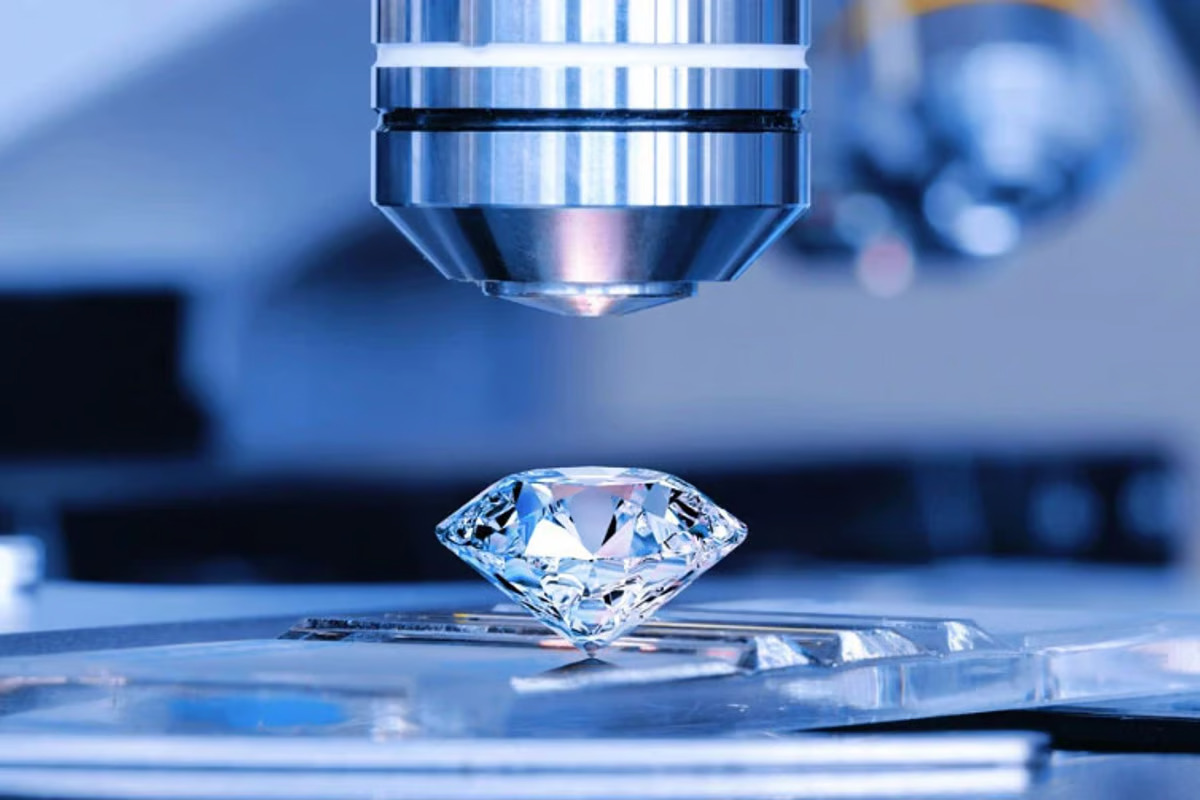
Lab-grown diamonds are chemically, optically, and physically identical to mined diamonds. A gemologist cannot distinguish them with the naked eye. Only specialized spectroscopic equipment can detect the difference.

Lab-grown, 2026
Lab grown diamond ring sparkling

Grown in 6 to 10 weeks via CVD or HPHT. 60 to 80 percent cheaper than mined equivalents. GIA and IGI certified. Ethically traceable.

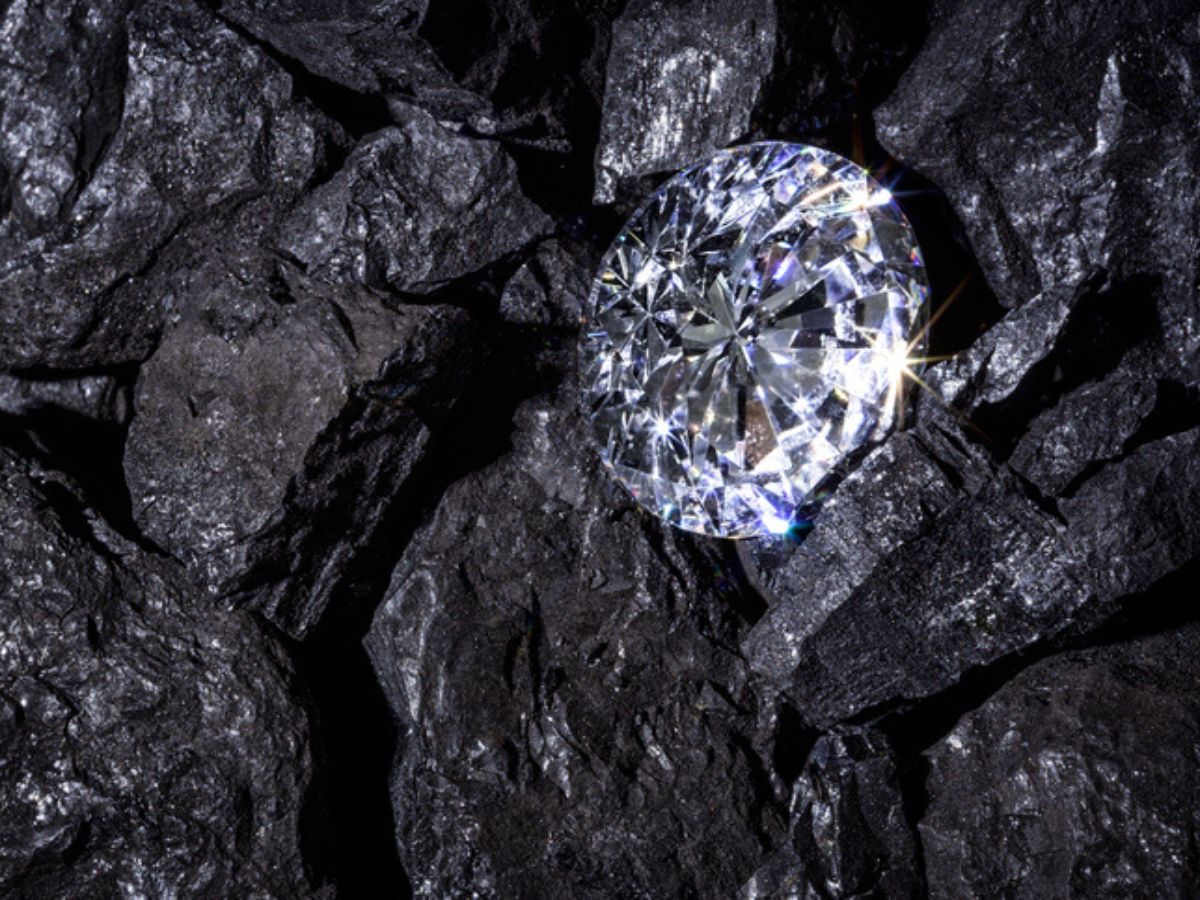
Mined
Mined diamond ring classic solitaire

Formed over billions of years under extreme pressure. Carries a geological origin narrative. Higher price reflects scarcity, not visual superiority.

In 2026, a 2ct G/VS1/Excellent lab diamond retails for $2,000 to $4,000. The same grade in mined runs $18,000 to $28,000. There is no visual difference. The case for lab is, at this point, overwhelming unless origin matters deeply to you.
Chapter 4

Does it have to be a diamond?

No. The diamond engagement ring is a 20th-century convention. Colored gemstones have a far longer history in betrothal jewelry. The only practical criterion for daily wear is hardness, measured on the Mohs scale from 1 to 10.

Sapphire  9/10The most popular alternative in 2026. Extremely durable. Deep blue, pink, yellow, or white. Lab sapphires available at a fraction of natural cost. Royal association.
Ruby  9/10The same mineral as sapphire, colored by chromium. Bold and vivid. Deeply traditional in South Asian cultures. High-quality naturals are rarer than equivalent diamonds.
Morganite  7.5/10Peachy-pink beryl. Romantic and fashionable. Softer than sapphire: will accumulate surface scratches over years of daily wear. Beautiful for occasional wear.
Moissanite  9.25/10Lab-grown silicon carbide. Harder than sapphire. More refractive than diamond, producing a pronounced spectral sparkle. Dramatically cheaper. The best stretch for budget buyers.
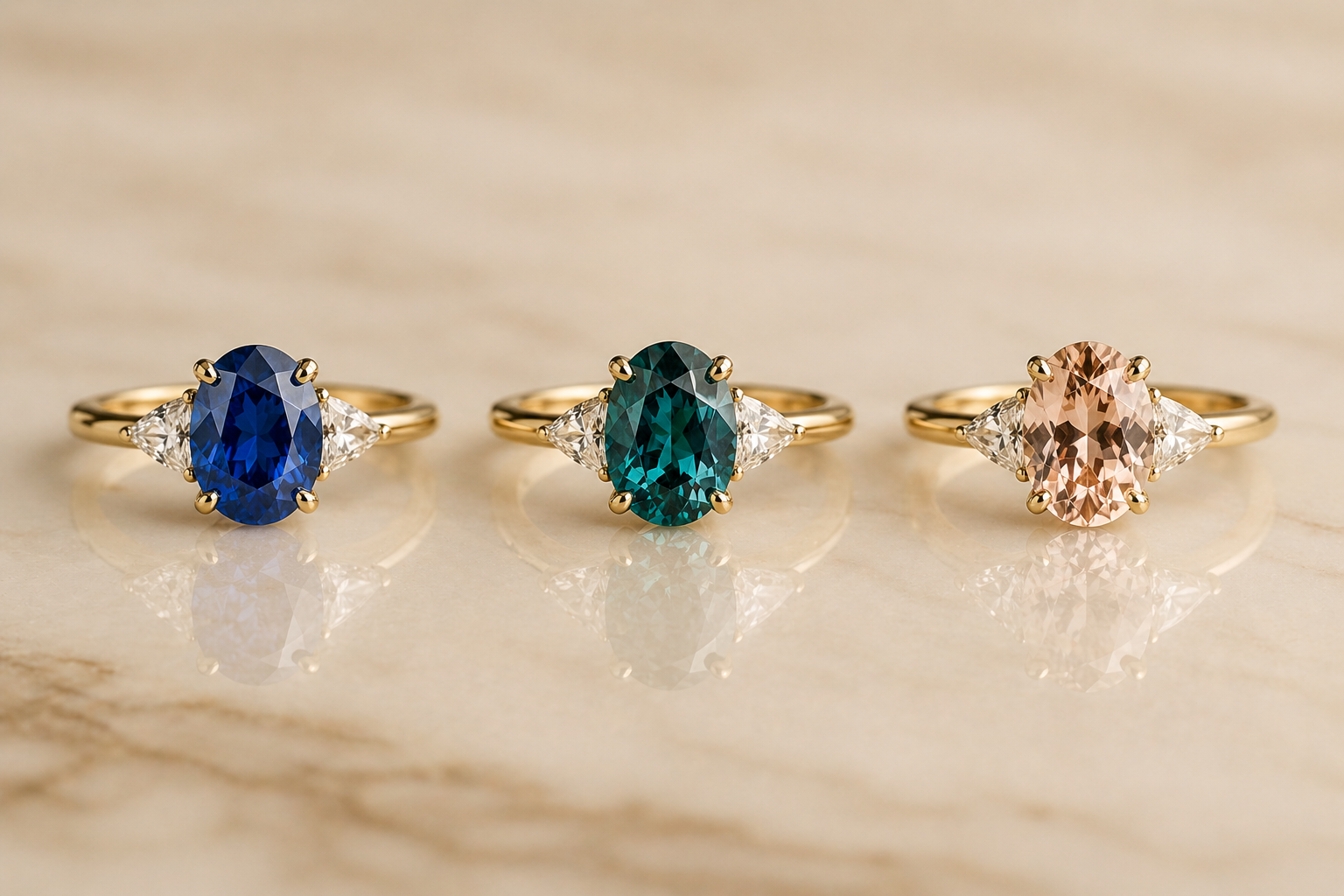
Colored gemstone engagement rings
Left to right: blue sapphire, teal sapphire, and morganite engagement rings
For daily wear: diamond (lab) or sapphire are the two most durable choices. Moissanite is the best budget alternative if you want maximum visual impact per dollar.
Part one complete

You now know
everything that
matters.

History. The 4Cs. Lab versus mined. Every alternative. You are no longer walking into a jeweler blind. Now it is time to make it personal.

01
History
02
The 4Cs
03
Lab vs mined
04
Gemstones
Part two: your preferences

Four choices. Stone, shape, setting, budget. They take less than five minutes and produce a specification you can walk into any jeweler with.

Chapter 5  ·  Your stone

Choose your stone

Select the one that feels right. You can always change your mind.

Recommended
Lab-grown diamond
Chemically identical to mined. 60 to 80 percent cheaper. GIA or IGI certified. The ethical, high-value choice of 2026.
Best value
Classic
Mined diamond
Formed over billions of years. Carries the geological origin narrative. Higher price, identical appearance.
Alternative
Sapphire
9/10 hardness. Deeply durable for daily wear. Lab sapphires available. Stunning in blue, pink, or teal. Royal heritage.
Budget stretch
Moissanite
9.25/10 hardness. More refractive than diamond. Dramatically cheaper. Lab-grown, ethical. A serious modern option.
Chapter 6  ·  Your shape

Choose your shape

Elongated shapes read larger per carat and naturally lengthen the finger. For petite hands (size 5 to 7), oval and cushion are especially flattering.

Select one or more

Oval Best for small hands Largest face-up, most flattering
Round Maximum brilliance, timeless
Cushion Great for petite hands Soft, romantic, vintage feel
Emerald cut Art deco, architectural elegance
Pear Feminine, elongates the finger
Marquise Most elongating of all shapes
Princess Modern, geometric, bold
Radiant Brilliant hybrid, versatile
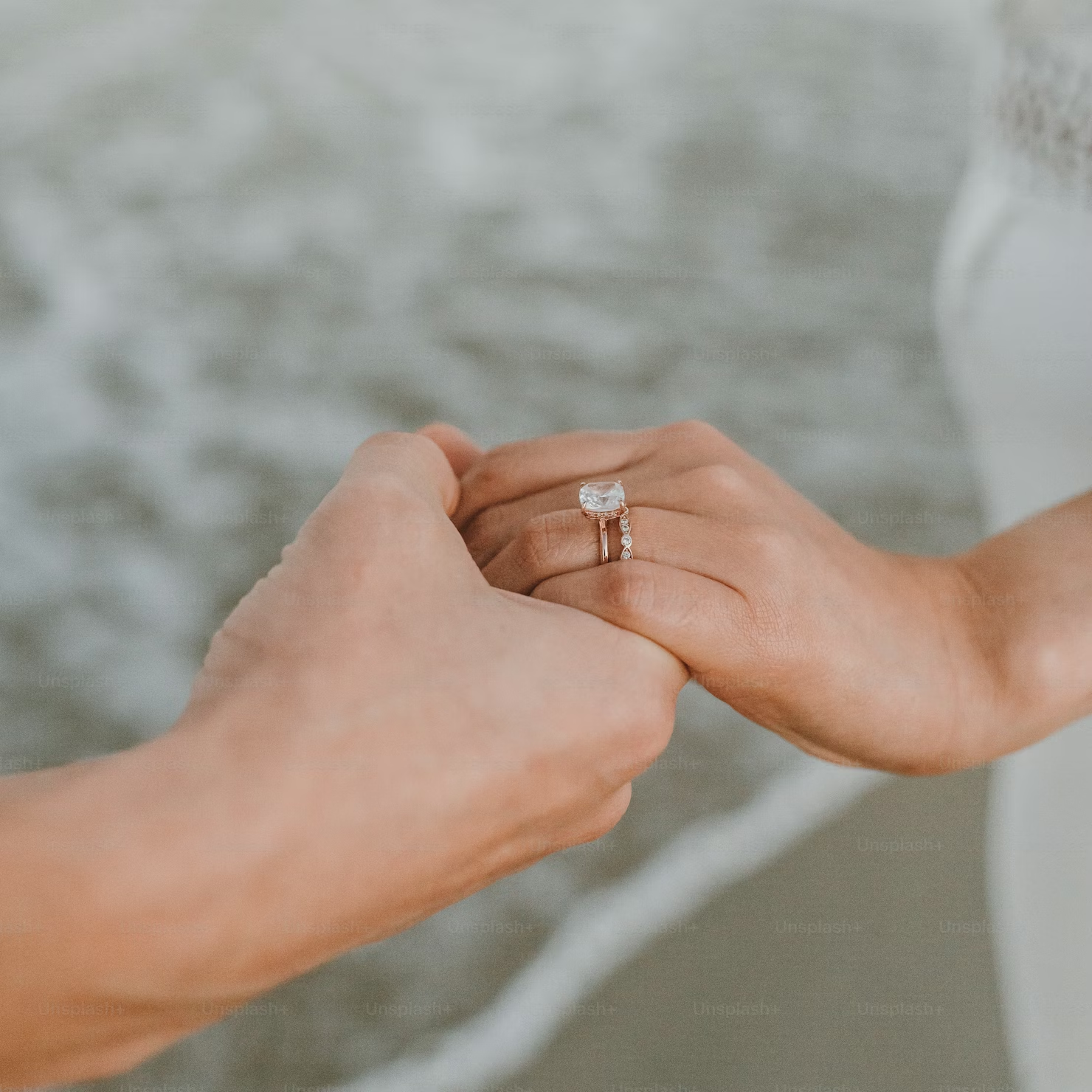
Oval diamond ring on petite hand
Oval cut on a slim pavé band — the most flattering shape for petite hands
For a size 6 to 6.5 petite hand: oval is the strongest recommendation. It maximizes visual size per carat, elongates the finger, and is the most sought-after shape of 2026. Elongated cushion is a close second with a softer, more vintage feel.
Chapter 7  ·  Setting & metal

Setting & metal

Setting style

Select one or more that appeal to you

Solitaire ring setting
Solitaire
One stone, clean band. The stone speaks alone. Timeless and always correct.
Most popular
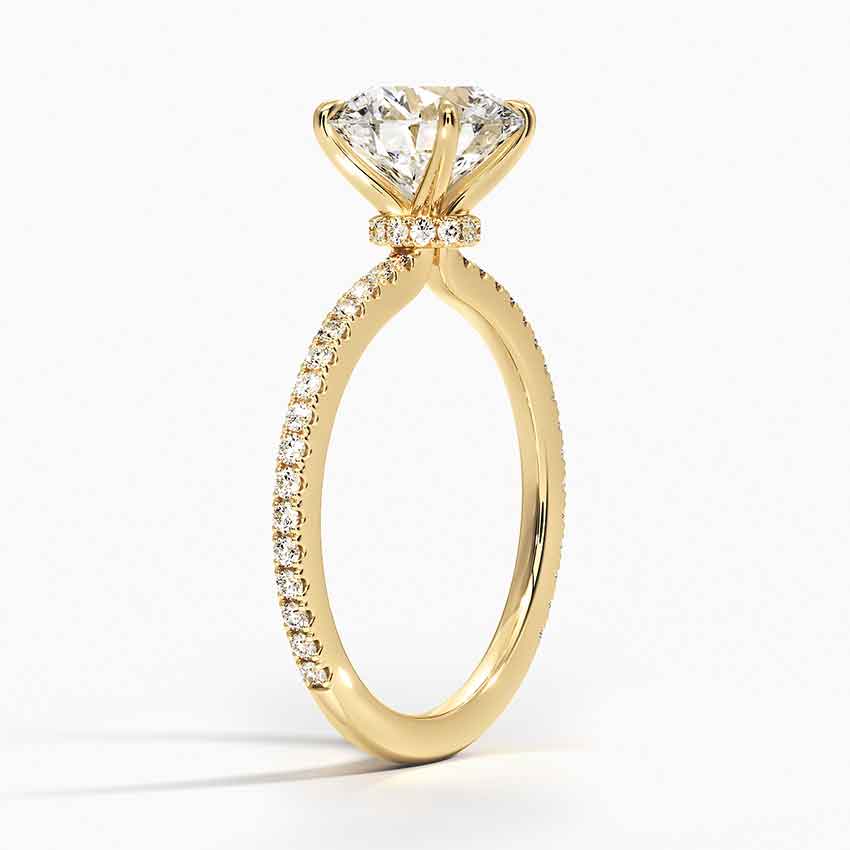
Pavé band diamond ring
Pavé / micropavé
Tiny diamonds set along the band. Adds continuous sparkle without changing the center stone.
Halo diamond engagement ring
Halo
Small diamonds surround the center stone. Makes it appear significantly larger. Vintage glamour.
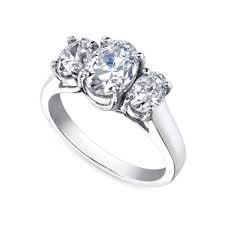
Three stone diamond ring
Three-stone
Center flanked by two side stones. Represents past, present, and future. Meaningful and balanced.
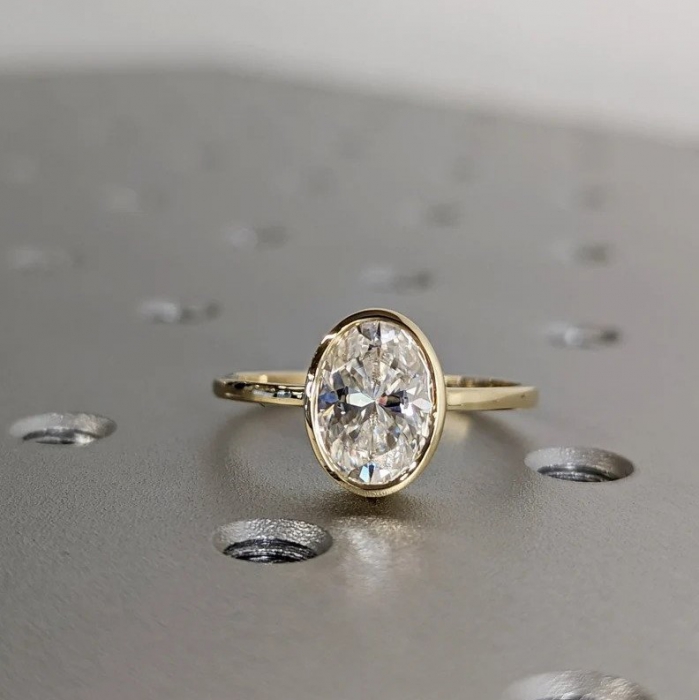
Bezel set diamond ring
Bezel
Metal rim wraps the stone edge. Sleek, modern, very secure. Great for active lifestyles.
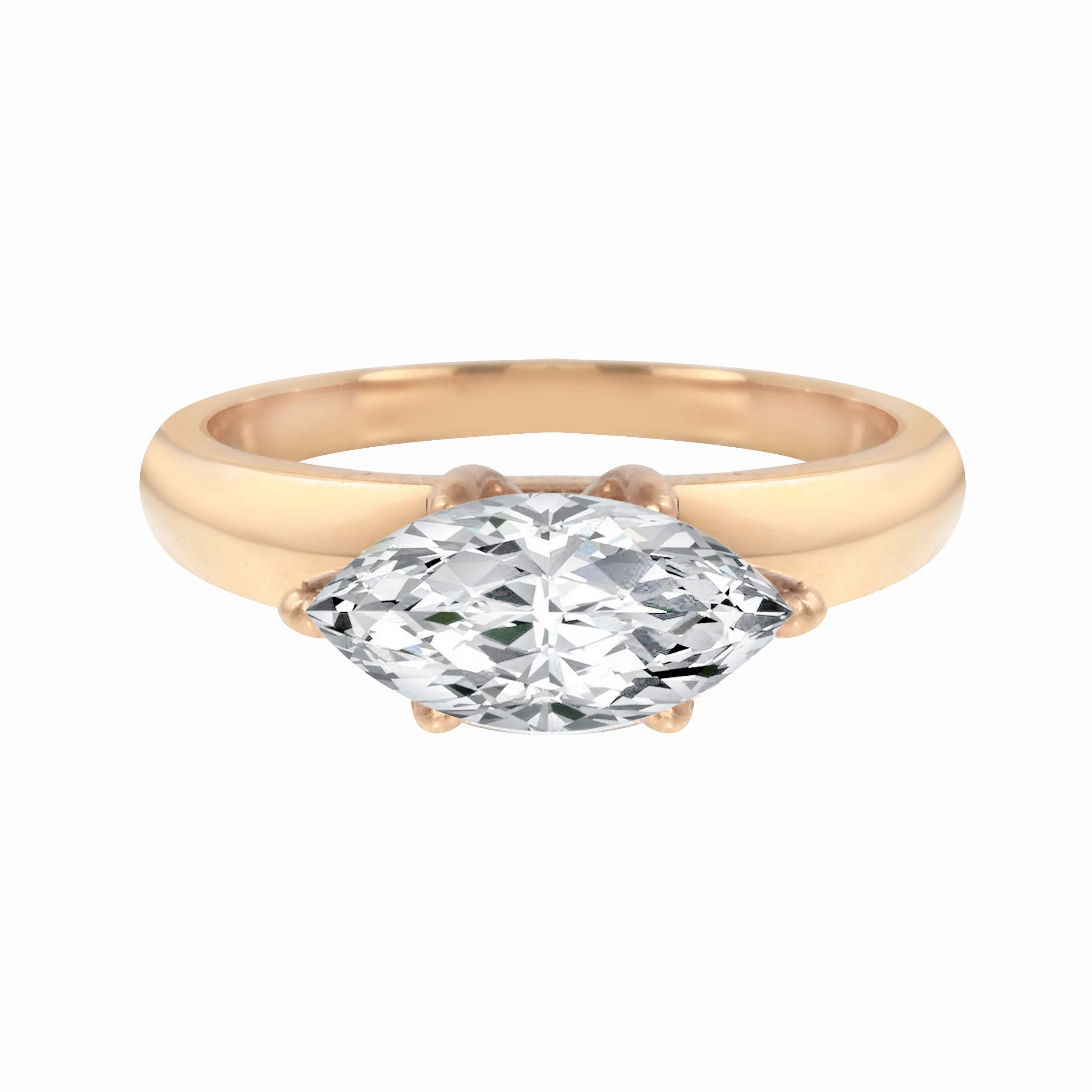
East west contemporary ring setting
East-West
Stone set horizontally. Contemporary and architectural. Striking with oval or marquise.

Metal

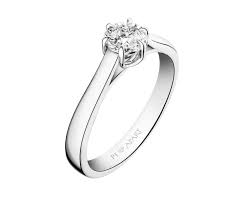
Platinum diamond ring
Platinum
Most durable. Naturally white forever. Hypoallergenic. The prestige choice.
White gold diamond ring
White gold
Looks like platinum at lower cost. Needs rhodium replating every few years.
Most common
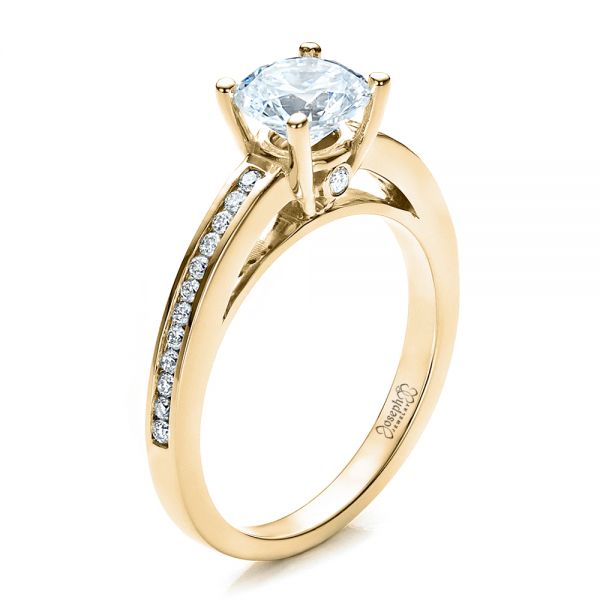
Yellow gold diamond ring
Yellow gold
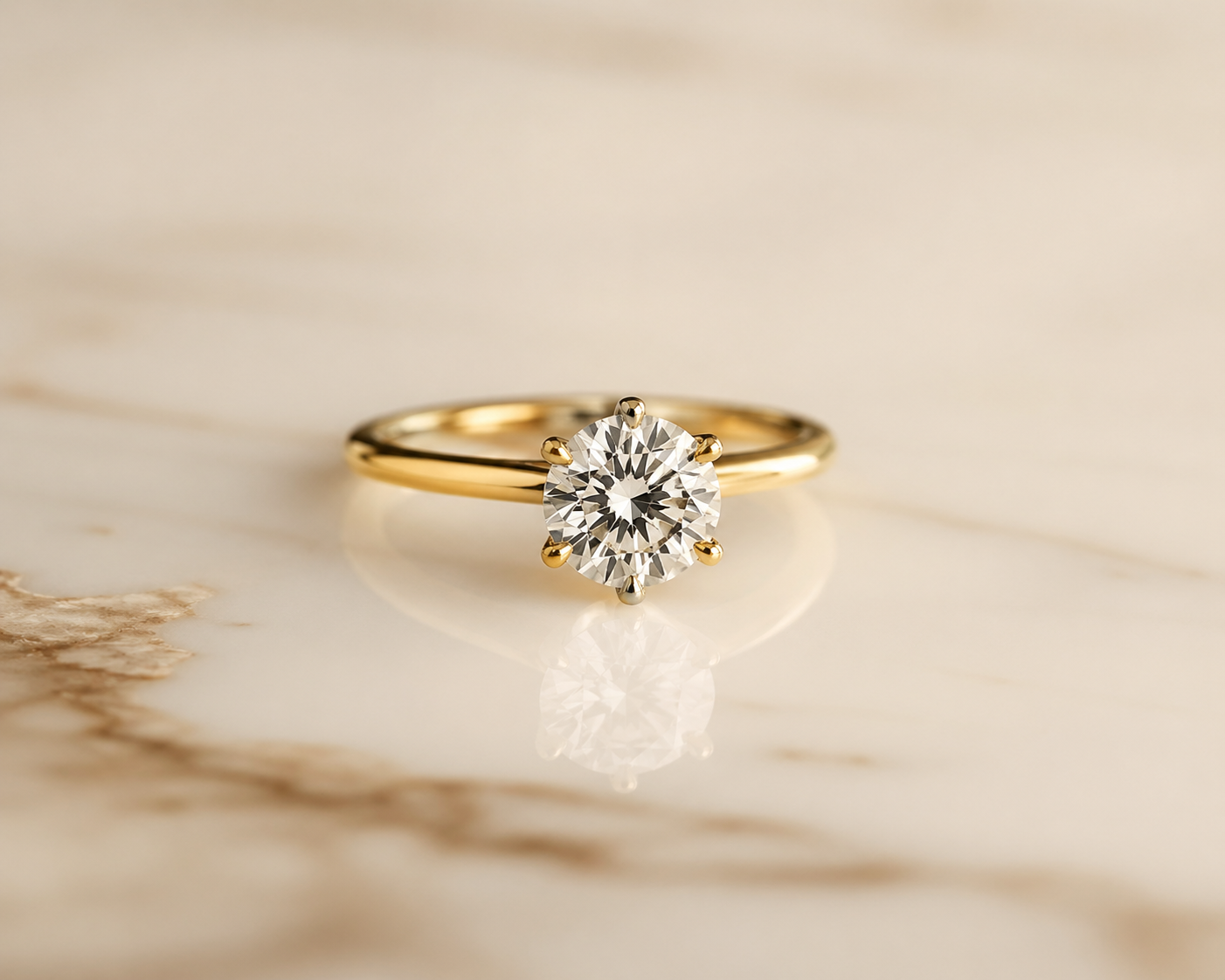
Classic and warm. Strong moment in 2026. 14k durable, 18k richer in color.
Rose gold diamond ring
Rose gold
Warm blush pink. Very flattering on most skin tones. Romantic, no replating needed.
Chapter 8  ·  Budget

What is your budget?

Total budget for stone and setting combined. Prices are 2026 retail.

$3,000
Stone + setting combined
$500$5k$10k$15k$20k
Chapter 8  ·  Your ring

Here is your ring.

Built from your preferences. Take this into any jeweler and you will know exactly what to ask for.

The Forever Guide  ·  2026
Your specification
Why this works for you

Where to buy
Always require certification

Ask for the GIA or IGI report number before purchasing. Verify it at GIA.edu or IGI.com. Takes two minutes. If a retailer cannot provide one, walk away.

Copy to share
Preview

Disclaimer  ·  All prices and market data are current as of 2026. Lab diamond prices fluctuate. Always compare at least two retailers and verify any certificate number independently at GIA.edu or IGI.com. For educational purposes only.